Lucy Crowe's Nest

Thursday, July 23, 2015

Home to Maycomb


"Maycomb was an old town, but it was a tired old town when I first knew it. In rainy weather the streets turned to red slop; grass grew on the sidewalks, the courthouse sagged in the square. Somehow, it was hotter then: a black dog suffered on a summer’s day; bony mules hitched to Hoover carts flicked flies in the sweltering shade of the live oaks on the square. Men’s stiff collars wilted by nine in the morning. Ladies bathed before noon, after their three-o’clock naps, and by night fall were like soft teacakes with frostings of sweat and sweet talcum."
I was probably ten when I first stepped into Maycomb and felt the drowsy July heat on the back of my neck. The light was different there – hazy and green, filtered through the lace of leaves and pink magnolia blossoms. The air – limpid and thick, sweet with Mimosas and sprinkled with fireflies. I padded barefoot though the soft dirt between the collard greens, shivered in Boo Radley’s shadow, and never wanted to come out again.
I have, in fact, returned every summer, and turning that first page always feels like coming home. Because Harper Lee’s magic is twofold; in reading her, I am transported not only Scout Finch’s childhood, but also to my own.  Open the book, and I am curled again on my grandmother’s couch. Sunlight is warped through the multi-paned windows; it throws rainbow prisms across the pages and the maple wood of the coffee table. Through the screen I can hear the indolent hum of bees and the long whistle of a bobwhite; from the kitchen the muted chatter of conversation. Water droplets traverse the length of my pink lemonade glass and Scout’s honeyed voice is as Southern as Brer Rabbit.
Anyone who denies the power of the written word has not read To Kill a Mockingbird.
Whenever the cynical half of my soul decries the value of an author career, I have only to remember the ten year old on the couch soaking Harper Lee into her soul the way sun tea takes on color. This woman’s words made me want to fashion my own; to create from sheer nothingness a world as layered and nuanced as the one I inhabited seemed a magic beyond comprehension, and I knew, even then, that I would have to try.
I’m still trying, and even on my most wretched day I’m forced to admit how much I love the by-now familiar process. Words, you see, are a gift.

"Since Atlanta, she had looked out the dining-car window with a delight almost physical. Over her breakfast coffee, she watched the last of Georgia’s hills recede and the red earth appear, and with it tin roofed houses set in the middle of swept yards, and in the yards the inevitable verbena grew, surrounded by whitewashed yards."

I can see it, can’t you? Harper Lee is back, blowing through our lives like the sweetest Alabama breeze, whispering in our ears, bringing with her the all of the old magic. Never, ever, has a sequel been more anticipated.
My copy of Go Set a Watchman has been ordered and should be arriving in the mail any day now, at which time I’ll be off the radar for a bit.
I’m going back to Maycomb.


~*~*~ 
Love Lucy Crowe's Nest?  Sign up for the new blog subscription and get posts sent to your inbox every week.  Submit the form in the right sidebar or enroll HERE.

~*~*~


Saturday, July 4, 2015

Uniquely American

Art by Henri Peter
We put our flag away the weekend after Memorial Day, and here we are, unfurling it again on this gorgeous lavender evening, twilight hour thick with lightning bugs and the smell of fresh -cut grass. Down the block someone sets off a bottle rocket – whine and pop, laughter – and through the open screen I can hear the Jimi Hendrix version of the Star Spangled Banner. When we wrestle the flag pole into its bracket, the brilliant stars and stripes are glorious against the smooth purple sky.

            It’s good to be here, isn’t it?   Here, barefooted in my front yard in the middle of my town in the middle of my country. 

            And I love tonight – the carnival lights and the stink of spent firecrackers, the facepaint, the music, and all the rowdy raucous hullaballoo that is so us. 

So noisily, uniquely American. 

Here, tonight, we won’t question ourselves. Let’s not bemoan our property taxes, the healthcare system or illegal immigration. Instead, let’s remember who we are, where we came from.  We the people. The first ever, anywhere, to believe that a dream could be shaped into a government and made to work not just for a few, but for all.  We the people who absolutely could not wear the cloak of oppression, could never bow before a king or accept a class system. We the people made up of different religions, colors and ethnicities but yes, all us. All American.  

            Tonight, we’ll cheer about that. We’ll sing about a flag that waves in every hollow, on every mountain, across the prairie of this, our home. 

            Happy birthday to us – may we never take us for granted.


~*~*~ 
Love Lucy Crowe's Nest?  Sign up for the new blog subscription and get posts sent to your inbox every week.  Submit the form in the right sidebar or enroll HERE.

~*~*~

Saturday, June 20, 2015

A Father, to a Daughter

In my dream, it is a perfect October day. A sky hard and blue as ceramic, the whole world on fire with the crimson death of summer, harvest in full swing; it is the sort of day that a child takes wholly for granted. 
I am sixteen and I’m driving the best tractor known to man, an International 806. Pulling a full wagon load of corn up the incline to the main road and not thinking about the yawning ravine off to my right. Until I throttle the engine back and it dies.
Here is where the dream veers into the realm of nightmares. There had been noise – the growl of tractor engine, indistinct radio static, birdsong – but now there is silence. My hand reaches of its own volition, moves languidly, like a fat bass under water, and turns the key in the ignition.
The engine stays dead and the tractor begins a slow roll backwards. 
I am going to die.
But then a miracle happens. The wagon strikes something hard. The tongue bends - the crash of metal on metal exploding into the quiet - and the tractor comes to rest, cockeyed, back tires just on the edge of the path. A handful of corn dislodges from the load and drops off into nothingness, brushing elm leaves on its way down the abyss.
My legs are jelly, but I jump from the tractor, roll once in the hard dirt and sit up to see . . . my dad.
He had been following in the grain truck, had seen my dilemma and accelerated to catch up, stopping my roll with the nose of his truck. 
Fathers, you see, stand - always and implacably - between their children and the stuff of nightmares.
A mother is the indispensable giver of hugs and kisses, the untiring listening ear, the arms that hold you when you cry. Fathers don’t know what to do with tears, but they will single-handedly slaughter every demon in your universe and they will, if you let them, give you all the tools you need for life. 
My own father taught me how to work and how to dance. How to play poker and how to pray. When I couldn’t balance a check book he got out his pencil; when I drove home drunk he summoned an awesome and righteous anger. 
He has been, and remains, the only hero in my universe whose feet aren’t made of clay. 
Father’s Day . . . well, it doesn’t quite cut it for most dads, does it? Chocolate, or socks, or a blue work shirt hardly say what needs to be said. 
But I think he knows. A father, to a daughter, walks amongst the gods, is the brightest and most infallible star in her sky. Although he would laugh out loud if he were to read this.
And then I would be embarrassed.
Happy day, Dad! I love you.

Tuesday, June 2, 2015

Maypops and Loblollies: Share Your Thoughts On My Query Letter

Maypop Flower Inspired Art by Liz9923
Today I typed the word “Loblolly” at the top of a page and took a deep breath. A big, lung-expanding breath like the one the captain of the swim team sucks before he dives into twelve feet of crystal blue water. 
 
“Beneath the Loblollies” is the third installment of my Rush series – wheeee! – and I’ve already typed the first word to the first outline, so I am well on my way. 
 
For me, there is no favorite aspect to writing. I have never not written, so I only notice the process when, for whatever reason it stops. Like an emphysemic gasping for air, I hunger – suddenly and acutely - for something not there. 
 
Until I open a new document and brush my fingers over the keys. And breathe again.
Book Two, “Maypops in September”, reached its conclusion about a month ago, and while that felt, on some level, like a death in the family, it also holds the promise of a new beginning. I am launching my beloved with all the oomph I can muster behind it, and I won’t be a bit surprised when it makes the NYT bestseller list. 
 
To that end  . . .  the search for agents begins! Query query query. Social media and conferences and online classes, and I am really enjoying this so much more than I had anticipated. Today I am sharing the joy by enlisting your help, oh loyal and awesome follower. Beneath, I have attached the query, which – minus its opening paragraph, which is uniquely tailored for each target agent - could also serve as a back cover blurb. 
 
Would you open my novel based on the following?
 
Detective John Rush knew well that nobody dies without complications. A death, any death, grew tentacles that strangled and bruised those standing closest to it.
John Rush arrives home from the city still bathed in the aftermath of a brutal car-jacking, certain that his new position with the rural Drug Task Force Team will be, in comparison, the proverbial piece of cake. He has failed to account for the tumultuous nature of life on the lake, and the reminder comes all too quickly in the form an unexplained death and a missing teenager.  Rush suspects that his new bride and her sister – recovering addict and sometimes ghost whisperer – are more deeply embroiled than they would have him believe, but when the girls close ranks nothing short of an arrest warrant will break them.
Life is further complicated by the arrival of Rush’s volatile daughter, currently on the outs with her mother and less than enthusiastic about building a relationship with Rush’s new family. When she steers unerringly into the midst of a drug dealer’s scam and pronounces herself in love with all the energy of her sixteen years, Rush is admittedly out of his depth.  While he would normally turn to his wife for commiseration, he is all too aware of her current devotion to her firefighter career and is reluctant to press her. Will family ties withstand the constraints of two unique and very demanding jobs? And will Rush prevail against the dark appetites a seemingly aboveboard town father?  
 
“Maypops in September” is a literary fiction work that unflinchingly explores that darker side of human desires even while it celebrates the resilience of love. At 85,000 words it is comparable in size – and the stand-alone sequel to - its predecessor, “Sugar Man’s Daughter”, which was published by Rainstorm Press in September of 2013. I am currently seeking representation - with high hopes of finding a new home for my work - and I believe that my experience has left me with an understanding of the publishing and marketing experience. 
 
Please feel free to search me out on the web. I can be found at my author’s site, http://www.authorlucycrowe.com, my twitter page, https://twitter.com/AuthorLucyC, and on Facebook, https://www.facebook.com/AuthorLucyCrowe.  My first novel can be found for sale on Amazon, http://amzn.to/1Bhuy2Q  as well as Barnes and Noble, http://bit.ly/1oStP3a. Thanks so much for your consideration!         
 
Okay, don’t pull any punches, people! Let me know what you think!

Saturday, May 9, 2015

Mothers are the Weavers

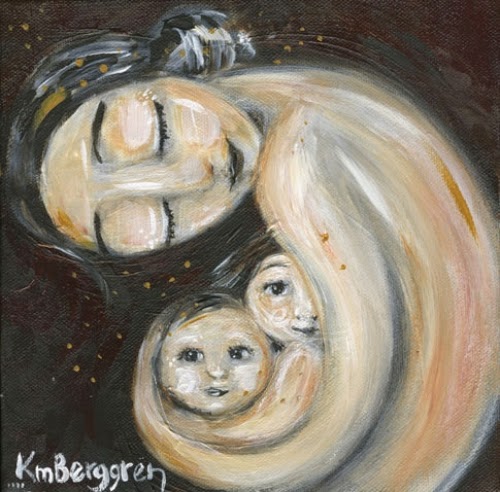
Mothers are the weavers. As indispensable as water, sunlight or oxygen. Their role is at once concrete and nebulous - undefined, and yet, somewhere, surely, carved in stone.

Here, I think, is the gist of the project: She must begin the weave with the threads from the past -  light and dark alike, gossamer silk as well as good, durable fishing line.  The threads my mother received from her own mother were as varied and colorful as the prairie land birds. Bright strings of flowers, art, and music, shot through with solid browns of practicality and fortitude. The courage thread is surely pink – neither neon nor pastel, but the deep, lovely shade of crab apple blossoms. It is an old thread, handed down from a grandmother who survived a train wreck and a mother who counted green stamps during the Depression.

So - first the fabrics and textures at hand, and then the unique new cloth of her own existence.  My mother wove in a blend of humor that laughs, always, at the inappropriate. A love of all things medical and all things mysterious. She filled our tapestries with cookies and Hail Marys, Band-Aids and hair ribbons. And love, always love.

A mother makes us who we are; only she has the bravery and the skills to shape a life, and never actually credit herself with the accomplishment of that monumental task.

The first lullaby sung to my first child was a gift from my mother, who had received it from her own mother and so on, probably all the way back to Eve. “Hush little baby don’t say a word”  and “Honey tie your shoe”. “Don’t eat an hour before swimming. Or communion” and “Never ask a boy on a date.” Along the way, the child became the mother, the new child the recipient, and the fabric of life brightened yet again. 

Mothers are life.

And so, to all the mothers, and especially to my own, who is the bestest, the brightest of all – happy day!  Joyous day! 


~*~*~ 
Love Lucy Crowe's Nest?  Sign up for the new blog subscription and get posts sent to your inbox every week.  Submit the form in the right sidebar or enroll HERE.

~*~*~

Friday, April 3, 2015

The Crux of Childhood Easter

My childhood Easters were all about dressing up, which, for me, made it the less-than-favorite holiday. I was more of a Scout Finch kid, comfortable in over-alls and bare feet; a dress, any dress, could only itch.

My mother, however, delighted in this highest, holiest of Catholic days – and showed her joy in the display of six clean and lovely offspring. Three boys in suits. Three girls in matching dresses, jackets and shiny black Mary Janes. We swore that she pinned the lace head cap right into our skulls.

Mass? By Easter Sunday we had been half a dozen times in as many days, had observed the fasting rules (staying up until midnight on Good Friday in order to eat  M&Ms) and kept our Lent promises. (I give up pop, television, calling my brother bad names.)  Holy Week was at last behind us, and soon, soon, the dress could go back in the closet.

But here is the crux of childhood Easter. We were better people then.  There are days, I think, when I would sell my soul to be the little girl with straight bangs and an itchy dress again – she exists, in my memory, so whole, and in my mind I can trace her Easter route from start to finish.

Church. Latin words that I hadn’t yet prayed for solace, because I had never needed solace. So – just a drone unremarkable as the noise of honey bees.  Sunshine through stained glass windows and incense tickling the nose. My mother’s unmitigated soprano soaring in glorious praise, my father’s occasional cough. (Dear God, let him get hiccups, I would pray my sole Easter prayer. Nobody got hiccups like my dad.)

Mass at last finished, we would go to Grandma’s. Tulips in bloom, and bird’s nests cookies. Gossip at the kitchen table, and the surreptitious teasing of the fat housecat. 

From there to my aunt’s. Uncle Don was probably six feet tall, but he seemed as big as the sky to us; he could lift us all the way to the ceiling. 

Older cousins who teased, aunts who scolded, the smell of peppered roast and mashed potatoes and the lull of adult conversation, and all the while . . .  I think she knew. The restless little girl in the stiff linen knew even then how fast it was all sliding past. 

And while she wanted the hell out of that dress and the day was dull beyond measure . . . Ah, wouldn’t it be good to have it back now? To see us as we were that day? 

But Easter is all about joy, isn’t it? Cleanliness and that simple rock-hard goodness that, in adulthood, is as elusive as the last egg. How did my parents do that? How did they keep hold of that solid, essential all-is-wellness? 

Another Easter. Tulips in bloom and little girls in dresses. Hot, drowsy sunlight through stained glass windows and my daughter’s voice the perfect echo of my mother’s.  Holy holy holy. 

Ah, life is still good, people. Jesus still loves us, and here we are, having straggled whole through another year. Take heart.

In fact, be joyful, people.

Happy, happy Easter.


~*~*~ 
Love Lucy Crowe's Nest?  Sign up for the new blog subscription and get posts sent to your inbox every week.  Submit the form in the right sidebar or enroll HERE.

~*~*~

Thursday, February 19, 2015

Know That This Is Transient

February in Illinois is a splendid and confounding mix, comprised of blizzards and silvery rain showers, northers howling over the prairie and tentative crocus tips peering up through the snow. We’re never quite certain we’re going to make it, are we?

But Lent is already upon us, and to me this is a beacon in the darkness. I’ll tell you why:

Lazare veni foras.” 

 Lazarus, come forth. Best story ever, people. And the reason for this is not so much that beautiful blaze of glory when the man emerged from the tomb as what proceeded it. Jesus wept.

That sticks in the mind, doesn’t it?

Why? Why would this man - this Jesus who was to become something at once as glorious and mundane as a household name – why would He weep?

Well . . . why do we weep? It’s not so hard, is it, to follow that shitty path of discouragement, despair, loss? If you’re reading this, then you’re alive, and if you’re alive, odds are, you’ve been there. We weep because we’re at the end of our rope. Because winter is eternal, because we are exhausted, or maybe because the worst has happened and we will never hear the beloved voice of a friend, a spouse, a parent, a lover, again. 

We weep because we’re lost, because we can’t find the light. 

We can’t even believe there is a light.

Death doesn’t pick favorites. It’s as random as the smile of a stranger in a crowd, as capricious as March sunshine. It swoops down and plucks one from among us, and there is no recourse. No chance to say “I love you” or to retract a cruel word, no familiar arms to hold us, no warm and lovely voice in our ear.

But there is something to take away from this, and it isn’t despair. Jesus wept that day because he had lost a friend. He was exhausted, discouraged, and ultimately certain of his own impending death. But then He stood up and He shouted.

“Lazarus Come Forth!”  

And Lazarus did. We know that he did.

Your loved one won’t. Not here, not now. But you can’t go forward thinking that this is the end.  The entire purpose of Jesus’s life was to show us that there is no end. Whoever you’re missing, whatever darkness you are traveling in, know that this is transient, that time shuttles us forward, always so rapidly you don’t even know you’re moving. You won’t be in this bad spot forever. 

Because there is another side, okay? There is.

Winter ends, the crocuses bloom and Lazarus heard the voice of his beloved friend calling him. Come forth. Come out into the sunshine and stand tall.
Related Posts Plugin for WordPress, Blogger...